
There is one specific week in Central Florida when the air finally changes. You step outside in the morning and, for the first time since April, the humidity doesn't press down on you the second the door opens. In Dundee, Haines City, and across the Orlando metro, that week usually lands sometime in October.
Most homeowners treat it as a relief.
It is also a deadline.
Your house has just absorbed five straight months of heat, near-daily afternoon rain, and a full Atlantic storm season that doesn't officially close until November 30. What comes next is a narrow stretch of dry, mild weather — the only part of the calendar when exterior work is actually pleasant, when sealants and coatings cure the way the label says they will, and when local trades still have room on the schedule before seasonal residents arrive and the holidays swallow everything.
That window is short. Here is how to use it.
Why Is October the Last Easy Window of the Year?
Because three things line up in October and then quietly disappear: low humidity, mild temperatures, and an available contractor.
Exterior caulk, paint, deck coatings, and roof sealants all have temperature and moisture conditions they need in order to bond and cure correctly. Apply them in August, on a surface that has been sitting in 95-degree sun with a thunderstorm due at four o'clock, and you get a finish that fails early. October gives you dry mornings and workable afternoons.
The calendar matters just as much. Once the seasonal population arrives and the holiday stretch begins, roofers, AC companies, and handymen in Polk and Lake County get booked out. A repair you schedule in October gets done in October. The same repair discovered in January becomes a waiting list.
What Does a Full Storm Season Leave Behind Even If No Storm Hit You?
The cumulative wear nobody ever files a claim for.
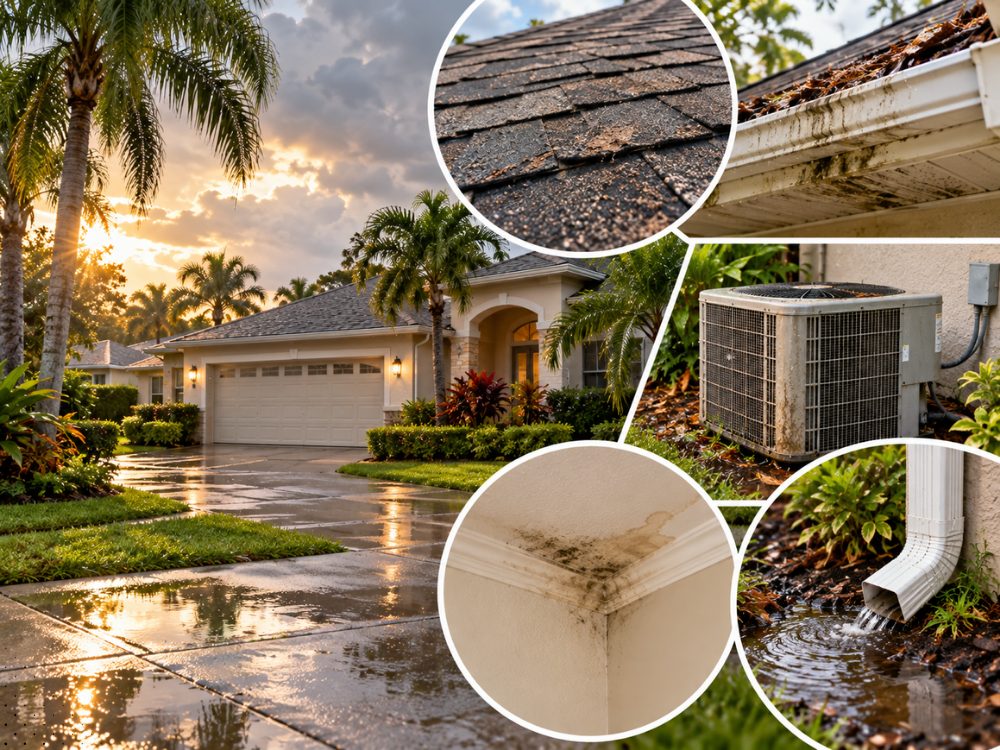
You don't need a named system to make landfall on your street for storm season to age your house. Sustained gusts, relentless rain volume, and saturated soil work on a home slowly. Walk the exterior and look for these specifically:
Soffit and fascia. Look up along the roofline for panels that have separated, dropped at one end, or developed a visible gap. Soffit is where wind-driven rain gets into an attic.
Gutters and downspouts. A season of oak and pine litter plus roof grit will pack a gutter solid. Water then sheets over the edge and lands at the base of your wall — exactly where you don't want it.
Screen enclosures and pool cages. Check fasteners, corner brackets, and cable tension. These loosen a little with every windy afternoon.
Roof penetrations. Vent boots, pipe collars, and flashing take the worst of the UV and the water. Cracked rubber boots are one of the most common leak sources in Central Florida homes.
Soil at the slab. Heavy rain erodes grade. If dirt or mulch has washed away and the ground now slopes toward the house, you've built yourself a funnel.
Which Projects Actually Belong in October?
The ones that need dry weather to succeed. Put these at the top of the list:
- Re-caulk exterior window and door perimeters, and any penetration where a wire or pipe enters the wall
- Repaint or reseal exposed wood trim, fascia, and garage door jambs
- Reseal the driveway, pool deck, or paver joints
- Re-grade soil so it falls away from the slab on every elevation
- Trim tree limbs back off the roof and away from the service drop before dry-season fronts push through
- Clear roof and soffit vents so the attic can breathe
None of this is glamorous. All of it is far less painful on your schedule than on the schedule a failure picks for you.

Does Your AC Really Get a Break in a Florida Fall?
Not much of one — and the small break it does get creates its own problem.
When outdoor temperatures ease, your system runs shorter cycles. Shorter cycles remove less moisture from the air. The thermostat reads satisfied while indoor humidity quietly climbs, and you end up with a house that feels cool and smells musty at the same time. That's the classic Central Florida shoulder-season complaint, and it's a humidity problem, not a temperature problem.
Two things to check now:
The condensate drain line. After a full wet season, biological growth in the line is common. A clogged line backs up into the air handler pan and then into your ceiling or flooring. Many homeowners can flush it themselves; if you can't locate the access point, have a technician do it.
The air handler closet or platform. Look for staining, rust at the pan, or damp insulation. Any of those means water has already been somewhere it shouldn't be.
What Indoor Items Get Forgotten Until the Holidays?
Every one of these is easier to handle in October than during a house full of guests:
- Dryer vent. Lint accumulation is a genuine fire risk, and holiday laundry volume is when it gets pushed hardest. Disconnect, clear the duct, and confirm the exterior flap opens freely.
- Water heater. Look for corrosion or mineral crust at the fittings and at the temperature/pressure relief valve, and check for dampness on the floor beneath the tank.
- GFCI outlets. Press the test and reset buttons on every kitchen, bath, garage, and exterior receptacle. A GFCI that won't trip isn't protecting anyone.
- Smoke and carbon monoxide alarms. Test them and change batteries. October is Fire Prevention Month — use the reminder.
- Under-sink cabinets. Run a hand along the supply lines and the cabinet floor. A slow leak announces itself as a soft spot long before it announces itself as a bill.
When Should You Have Someone Else Walk the House?
When you want to know what a homeowner walkthrough can't tell you.
A flashlight and a Saturday will catch the obvious. It won't trace a moisture path back to its origin, evaluate the true condition of a roof from the surface, or read the difference between cosmetic staining and an active intrusion. That's what a maintenance inspection is for — a full, documented look at the house as it stands today, so you're deciding from information instead of guessing.
Luis Figueroa at A.C.F. Home Inspections serves Dundee, the greater Orlando metro, and Polk County, and knows what this climate does to a house between April and October.
Call or text (407) 218-6522 to schedule your inspection. Do it while the weather is on your side.
Want a full, documented look at your house this fall?
Call or text Luis and Wanda directly, or schedule online.
Call (407) 218-6522 Schedule OnlineWatch: October Home Maintenance Checklist for Central Florida
Frequently Asked Questions
Why is October the last easy window of the year for home maintenance in Central Florida?
October is when low humidity, mild temperatures, and contractor availability line up in Central Florida. Exterior caulk, paint, and sealants need dry, moderate conditions to cure correctly, and local roofers and AC companies book out once seasonal residents arrive and the holidays begin. A repair scheduled in October gets done in October.
What does a full Florida storm season leave behind even if no storm hit your home?
Cumulative wear that never becomes an insurance claim: separated soffit and fascia panels, gutters packed with debris, loosened screen enclosure fasteners, cracked roof vent boots and pipe collars, and eroded soil grade that now slopes toward the slab. Walk the exterior and check each one after storm season.
Which home projects should Central Florida homeowners do in October?
The projects that need dry weather: re-caulking exterior windows, doors, and wall penetrations; repainting or resealing exposed trim and fascia; resealing driveways and pool decks; re-grading soil away from the slab; trimming limbs off the roofline; and clearing roof and soffit vents.
Does an air conditioner get a break during a Central Florida fall?
Not much of one. Cooler outdoor temperatures mean shorter run cycles, which remove less moisture from the air, so indoor humidity climbs while the thermostat reads satisfied — a cool house that smells musty. Check the condensate drain line for biological growth after the wet season, and inspect the air handler area for staining, rust, or damp insulation.
What indoor maintenance items should be handled before the holidays?
Clear the dryer vent duct and confirm the exterior flap opens freely, check the water heater fittings and relief valve for corrosion or dampness, test and reset every GFCI outlet, test smoke and carbon monoxide alarms, and check under-sink cabinets for slow supply line leaks.
When should a Central Florida homeowner get a professional maintenance inspection?
When you want to know what a homeowner walkthrough cannot tell you — the origin of a moisture path, the real condition of a roof surface, or whether staining is cosmetic or active. A.C.F. Home Inspections serves Dundee, the greater Orlando metro, and Polk County. Call or text (407) 218-6522 to schedule.