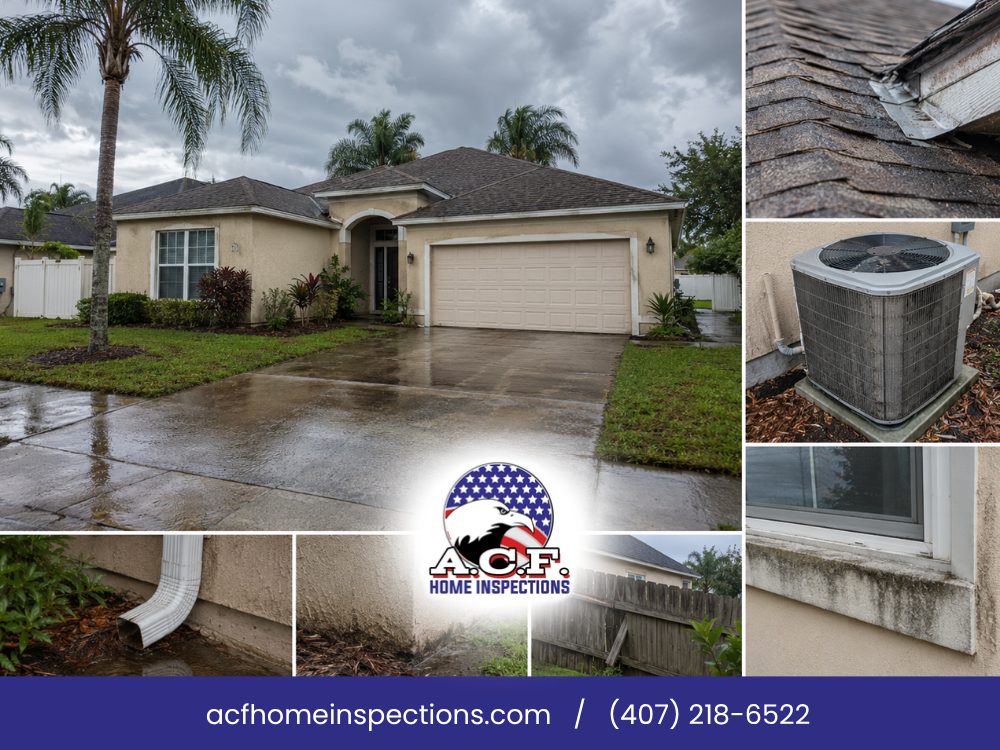
Sometime this month, a cold front will push down the peninsula and you will reach for a thermostat setting you have not touched since February or March. In Dundee, Lakeland, Winter Haven, and across Polk County, it usually happens on a weekday evening, right about the time you remember that family is arriving for Thanksgiving in two weeks.
Your air conditioner has been working hard since spring. Your heat has been sitting still the whole time.
That idle stretch is exactly why it deserves a few minutes of attention now — before the first chilly night, before the guest room fills up, and before every service company in Central Florida gets the same phone call on the same morning.
Why Does a Florida Heating System Need Attention at All?
Because it has been dormant for most of the year, and dormant equipment is where surprises hide.
Most Central Florida homes heat with either a heat pump — the same outdoor unit that cools the house, running in reverse — or electric heat strips inside the air handler. Some homes also have gas appliances or a gas furnace. Whatever you have, it has spent the summer collecting dust, and any small problem that developed in the off-season is still sitting there waiting for its first real workout.
Checking it on a mild afternoon, when nobody is cold and nobody is waiting on you, beats discovering a problem at ten o'clock on the first chilly night.
What Should You Expect the First Time the Heat Comes On?
A brief warm-dust smell is normal. Anything that lingers is not.
Heat strips and heating surfaces burn off the dust that settled on them over the summer. That smell should fade within the first run or two. If it doesn't — or if you smell something sharp, electrical, or like hot plastic — turn the system off and have it looked at before you use it again.
Before the first cold front arrives:
- Change the air filter. A clogged filter makes any heating mode work harder.
- Run the heat for a few minutes on a mild day so you know it works before you need it.
- Clear the area around the indoor unit and the return grille — the air handler closet is not storage space.
- Listen for new noises — rattling, grinding, or repeated clicking with no heat.
- Walk every room and confirm warm air is actually coming out of each register.
How Do You Tell Normal Heat Pump Heat From Emergency Heat?
Know what your thermostat is telling you before the coldest night of the season.
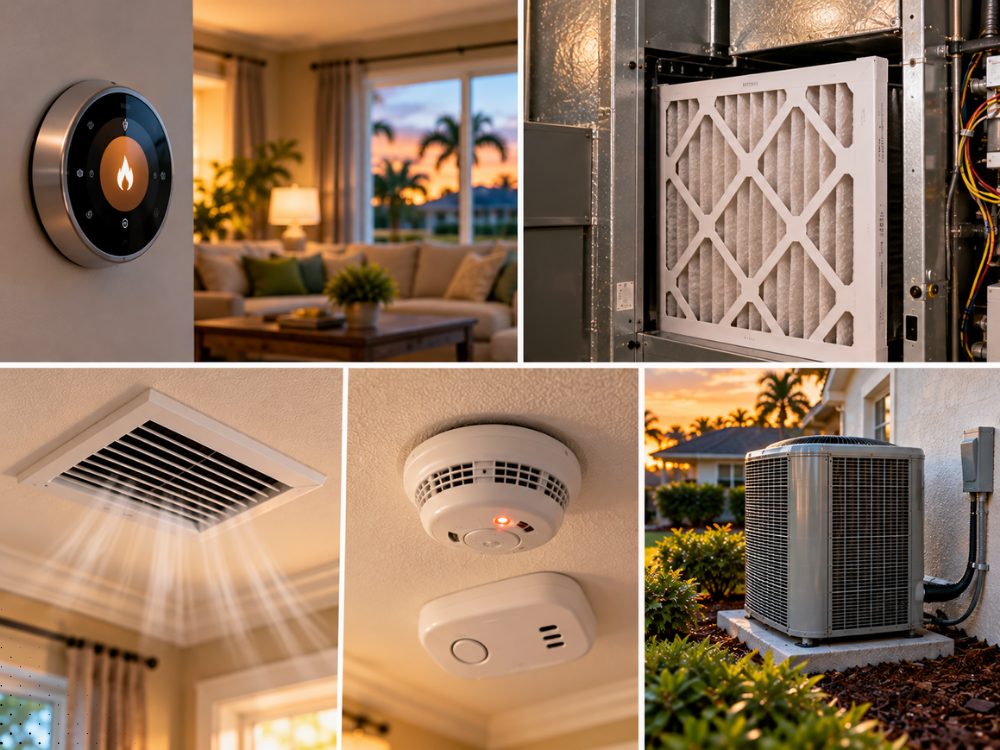
When outdoor temperatures dip, a heat pump may bring on its backup electric heat strips to keep up. Many thermostats show that as "AUX" heat, and it is normal in cold weather. "EM" or "Emergency" heat is different — it is a setting you choose, and it runs the strips alone. Some homeowners flip it on by accident and then wonder why their electric bill jumped.
Two other things surprise people the first time they see them:
A cloud of vapor from the outdoor unit. On cool, damp mornings, a heat pump periodically runs a defrost cycle. A brief puff of steam and a pause in the fan is normal.
Heat that feels lukewarm. Heat pump air feels cooler at the register than a gas furnace does. Lukewarm air is normal. Cold air blowing constantly in heat mode is not.
Is Your Home Ready for a Houseful of Holiday Guests?
A full house changes how your home is used — more cooking, more people sleeping in unusual places, more things plugged in.
- Carbon monoxide alarms. If your home has any fuel-burning appliance — a gas range, gas water heater, gas furnace, or fireplace — or an attached garage, you need working CO alarms, especially near sleeping areas. Guests sleeping on an air mattress in the den count.
- Smoke alarms. Test every one. Replace batteries where needed.
- Space heaters. Florida homes that rarely need heat often have a space heater in a closet. Give it clear space on every side, keep it away from bedding and curtains, and plug it directly into a wall outlet — never an extension cord or power strip.
- Fireplaces. If you have one and it has not been used since last winter, have it checked before the first fire. Open the damper before lighting it.
- Holiday lights and cords. Outdoor lights belong on outdoor-rated cords and GFCI-protected outlets.
What Should You Do Before You Travel for Thanksgiving?
If you are the one leaving town instead of hosting, set the house up to take care of itself.
- Don't shut the AC off completely. Hurricane season doesn't officially close until November 30, and Central Florida humidity doesn't take a holiday. A closed-up house with no air movement is an invitation for musty odors and moisture problems. Set the thermostat to a moderate setting instead.
- Know where your main water shut-off is — and consider turning it off if you will be gone for more than a few days.
- Check the water heater and the supply lines under sinks and behind the toilet and washing machine. A slow drip becomes a flooded floor when nobody is home for a week.
- Ask a neighbor to walk through if you'll be away for an extended stretch.
When Is It Worth Having a Professional Look at the House?
When you'd rather know than guess.
A homeowner walkthrough catches the obvious. It won't tell you the condition of an air handler you can't easily see into, whether that faint ceiling stain is old or active, or what an aging water heater or electrical panel is really doing. A maintenance inspection gives you a full, documented look at the house as it stands today — so you head into the holidays with a list, not a worry.
A.C.F. Home Inspections has served Polk County and Central Florida since 2001. Luis and Wanda Figueroa are based in Dundee and inspect homes across Lakeland, Winter Haven, Haines City, Bartow, Auburndale, and the greater Orlando area.
Call or text (407) 218-6522 to schedule your inspection — before the cold front, and before the guests.
Want a full, documented look at your house before the holidays?
Call or text Luis and Wanda directly to schedule.
Call (407) 218-6522 Call or Text to ScheduleWatch: Getting Your Central Florida Heat Ready for the Holidays
Frequently Asked Questions
Why does a Central Florida heating system need attention before winter?
Because it sits idle for most of the year. Most Central Florida homes heat with a heat pump or electric heat strips in the air handler, and dust and small problems collect during the off-season. Checking it on a mild day, before the first cold front, is easier than discovering a problem on the first chilly night.
What should you expect the first time the heat comes on in a Florida home?
A brief warm-dust smell is normal as heating surfaces burn off dust that settled over the summer, and it should fade within the first run or two. A lingering, sharp, electrical, or hot-plastic smell is not normal — turn the system off and have it checked. Change the filter, test the heat on a mild day, clear the area around the indoor unit, and confirm warm air comes from every register.
What is the difference between auxiliary heat and emergency heat on a heat pump?
Auxiliary (AUX) heat is backup electric heat that a heat pump brings on automatically when it needs help in colder weather, and it is normal. Emergency (EM) heat is a setting the homeowner selects that runs the electric heat strips alone, and leaving it on by accident can raise the electric bill. A brief puff of vapor from the outdoor unit on cool, damp mornings is a normal defrost cycle.
How do you get a Florida home ready for holiday guests?
Install and test carbon monoxide alarms if the home has any fuel-burning appliance or an attached garage, test every smoke alarm, give space heaters clearance and plug them directly into a wall outlet, have an unused fireplace checked before the first fire, and put outdoor holiday lights on outdoor-rated cords and GFCI-protected outlets.
What should Central Florida homeowners do before traveling for Thanksgiving?
Do not shut the air conditioning off completely — set a moderate thermostat setting so a closed-up house does not trap humidity. Know where the main water shut-off is and consider turning it off for longer trips, check the water heater and supply lines for slow leaks, and ask a neighbor to walk through if you will be away for an extended stretch.
When should a Central Florida homeowner get a maintenance inspection?
When you want to know what a homeowner walkthrough cannot tell you, such as the condition of the air handler, whether a ceiling stain is old or active, or how an aging water heater or electrical panel is performing. A.C.F. Home Inspections has served Polk County and Central Florida since 2001. Call or text (407) 218-6522 to schedule.