
November changes the Polk County housing market in quiet ways. The afternoon storms are behind us, the first cold fronts start drifting down the peninsula, and many local buyers step back from their search until after the holidays. At the same time, buyers from colder states begin arriving in Dundee, Lakeland, Winter Haven, Haines City and across Central Florida, hoping to be settled before the new year.
If you are one of the buyers still shopping, a winter home inspection works the same way it does any other time of year. But the season changes what an inspector can see on the day, what some systems are doing, and what you should ask about afterward. Here is what a winter home inspection in Polk County FL can tell you — and where you should dig a little deeper.
Is Winter a Good Time to Buy a Home in Polk County?
It can be. When fewer buyers are out looking over the holidays, the ones who are still searching often face less competition for the same listing. Sellers who list in November and December are frequently motivated — relocating, settling an estate, or simply ready to move on — and some are more open to negotiating over inspection findings than they would be in a busy spring market.
Central Florida's winter weather also helps. The dry, mild stretch from November into spring is when roofers, AC companies and other trades can actually do exterior repair work properly, so findings from a winter inspection can usually be handled on a reasonable timeline.
The trade-off is the calendar. Thanksgiving falls on November 26 this year, and the weeks from there to New Year's are when sellers, agents, lenders, insurers and contractors all get harder to reach. Book your inspection as soon as you are under contract.
What Does a Home Inspection Cover in Winter?
The same things it covers in July. A standard home inspection is a visual, non-invasive assessment of a home's accessible structures and major systems — the roof, foundation, plumbing, electrical, HVAC, and interior and exterior features. A.C.F. Home Inspections reports what is present and how it performs on the day of the inspection, in a written report with photos.
Several services Florida buyers ask about are not part of a standard inspection and are ordered separately, with their own fee: a 4-point inspection, a wind mitigation inspection, a WDO (wood-destroying organism) inspection, pool and spa equipment, and a sewer scope. Your agent and your insurance professional can tell you which of those your purchase needs. Give A.C.F. a call so they can price your inspection and any add-on services.
What Can a Winter Inspection Show That a Summer Inspection Can't?
A few useful things, most of them tied to the heating side of the house.
- The heat actually gets used. In a Central Florida summer, the heating mode of a heat pump or the electric heat strips in an air handler may go months without running. On a cool winter morning, the heating side of the system is doing real work — and that is exactly when problems like weak airflow or a burning smell show up.
- The house under normal cool-season use. Fireplaces, space heaters, gas appliances and holiday lighting all see more use in winter. It is a natural moment to look at carbon monoxide alarm coverage, smoke alarm placement and outlets that are carrying extra load.
- The house after a full storm season. Hurricane season officially ends November 30. A winter inspection looks at a home that has just been through the wettest, windiest part of the year — so evidence of wind-lifted shingles, soffit that has pulled loose, and past water entry at windows and ceilings is fresh.
- Drainage patterns left behind. Once the ground dries out, erosion lines, washed-out mulch, and staining at the base of exterior walls can show where water has been collecting against the slab all summer.

What Are the Limits of a Winter Home Inspection in Central Florida?
Every inspection is a snapshot of one day. In winter, a few parts of that snapshot deserve extra attention.
Roof leaks may not be active
In the dry season, a roof that leaks in August may be completely dry in December. An inspector looks for the evidence a leak leaves behind — staining on ceilings and attic sheathing, previous patch work, damaged flashing, cracked vent boots — but a leak that is not happening on inspection day can be harder to confirm. Read those notes carefully, and ask the seller directly about any past roof repairs or insurance claims.
Cooling may not be operated on a cold day
Most Central Florida winter days are mild enough to run the air conditioning. On a genuinely cold morning, though, inspectors commonly avoid running cooling mode because many manufacturers caution against operating it in low outdoor temperatures. If the report notes that cooling was not operated, ask for the system's service records, find out its age, and consider asking your agent about a follow-up evaluation before your contingency expires.
Seasonal and vacant homes may have systems shut down
Many winter listings are seasonal homes or estates that have sat empty. If the power, water, or gas has been turned off, those systems cannot be operated or evaluated. Ask your agent to confirm with the seller that every utility will be on for the inspection. A home that has been closed up for months also deserves a careful read of the report's notes on humidity, musty odors, water heater condition and plumbing supply lines.
Irrigation and outdoor features may be off-season
Irrigation schedules change in the cool season, and some owners shut systems down entirely. Pools and spas are not part of a standard inspection at all. If the outdoor features matter to you, ask about them separately.
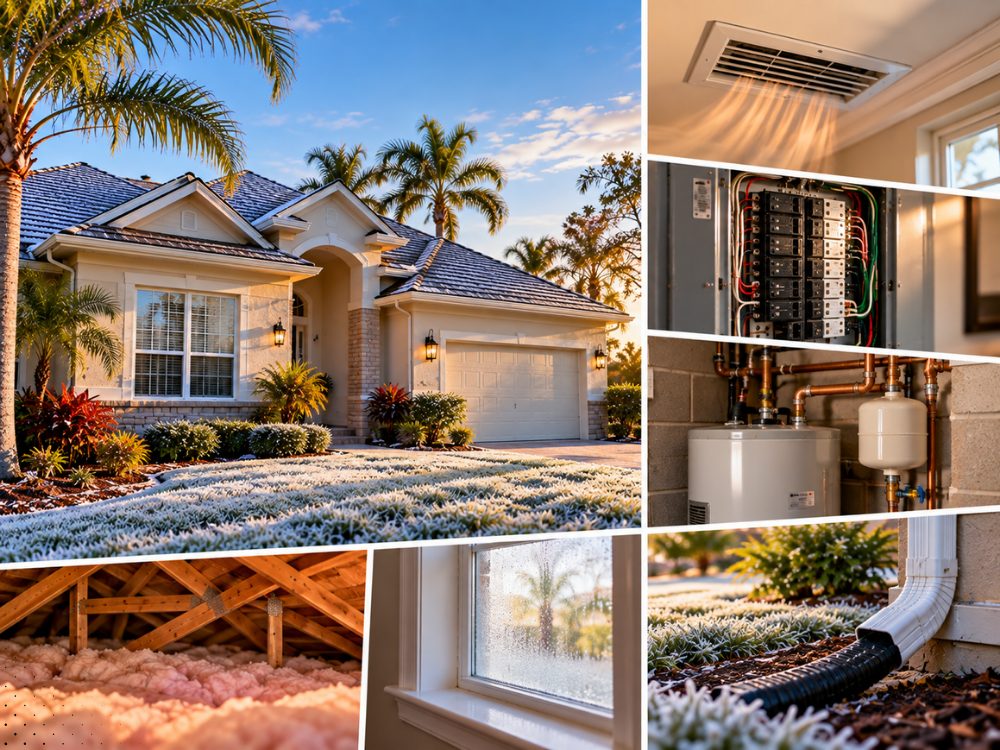
What Should Polk County Buyers Watch for in a Winter Report?
The same things that matter in every Central Florida purchase — with a winter lens.
- Roof age and condition. Florida insurers look closely at the roof. A roof finding can affect whether and how you can insure the home, not just your repair list.
- The HVAC system. Age, condensate drainage, the air handler pan, and how the heating side performed on inspection day.
- Electrical panel type and condition. Older panels, missing GFCI protection and do-it-yourself wiring changes in older Polk County housing stock are worth understanding before closing — and some of them draw insurer attention.
- Moisture and humidity. Staining, soft spots at window sills, and musty areas, especially in homes that have been closed up.
- Water heater and plumbing. Age, installation details, the relief valve discharge line, and any active or past leaks at visible supply connections.
- Grading and drainage. Soil and mulch that slope toward the slab, and downspouts that discharge against the house.
Should You Attend a Winter Home Inspection?
If you can, yes — it is the best way to understand the house. If you are buying from out of state, it is not required. The written report with photos is built so you can see what the inspector saw, and you can ask the inspector to walk you through the findings by phone. Either way, set aside time to go through the report line by line before your inspection period ends, and get estimates on anything that matters to you while you still have the leverage to negotiate.
Watch: Winter Home Inspection in Polk County FL
Q&A: What Polk County Buyers Ask About Winter Inspections
Is a home inspection less thorough in winter?
No. The scope of a standard home inspection is the same year-round. What changes is what some systems are doing on the day — heating is more likely to be running, cooling may not be operated on a cold morning, and a roof leak may be dry. The report should state anything that could not be operated or evaluated.
Will the inspector test the air conditioning in December?
On most mild Central Florida days, yes. On a genuinely cold morning, cooling mode is commonly not operated because many manufacturers caution against running it in low outdoor temperatures. If that happens, the report will say so, and you can ask for service records or a follow-up evaluation.
Does a winter inspection include a 4-point or wind mitigation report?
No. Those are separate inspections on their own forms that answer an insurance carrier's questions, and they are ordered and priced separately. Ask your agent and insurance professional which ones your purchase needs.
What if the house is vacant and the utilities are off?
Systems that are shut off cannot be operated or evaluated. Ask your agent to confirm with the seller that power, water, and gas (where the home has it) will all be on for the inspection.
How soon should I schedule the inspection over the holidays?
As soon as you are under contract. The stretch from Thanksgiving to New Year's tightens every schedule in the transaction, and you want as many days as possible to review the report, get estimates and negotiate.
What areas does A.C.F. Home Inspections serve?
A.C.F. Home Inspections is based in Dundee, FL and has served Polk County and Central Florida since 2001, including Lakeland, Winter Haven, Haines City, Bartow, Auburndale and the greater Orlando area. Call to confirm availability for your address.
The cold fronts are coming and the holidays are close. If you are buying in Polk County this winter, schedule your home inspection with A.C.F. Home Inspections — call or text Luis at (407) 218-6522.
Want to see the full list of what a standard inspection includes? See the full range of inspection services.
Buying in Polk County this winter?
Call or text Luis and Wanda directly to schedule.
Call (407) 218-6522 Call or Text to Schedule